
Everything You Need to Know About Caps for Cat Claws
Are Caps for Cats Claws Actually Safe? Here’s What You Need to Know
Caps for cats claws are small vinyl covers that glue over your cat’s nails to blunt the sharp tips — and yes, they are generally safe when applied correctly.
Quick answer for safety evaluation:
- Do they hurt cats? No. They are painless and non-surgical.
- Do they block normal claw movement? No. Cats can still extend and retract their claws naturally.
- Are they toxic if swallowed? No. They are made from non-toxic materials and pass harmlessly through the digestive system.
- How long do they last? About 4 to 8 weeks per application.
- Are there any risks? Yes — they should not be used on outdoor cats, and improper sizing or too much adhesive can cause discomfort.
If your cat is shredding your sofa, scratching your kids, or you’re just trying to avoid the cost and cruelty of declawing, nail caps are one of the most talked-about solutions in April 2026. They’ve been around for over two decades, originally developed by a veterinarian, and are now recommended by groomers and vets alike.
But are they actually safe? That’s the question most pet owners — especially budget-conscious ones — want answered before spending money on them.
This guide breaks it all down clearly: how they work, how to size and apply them, and what the real risks are.
Understanding the Function of Caps for Cats Claws
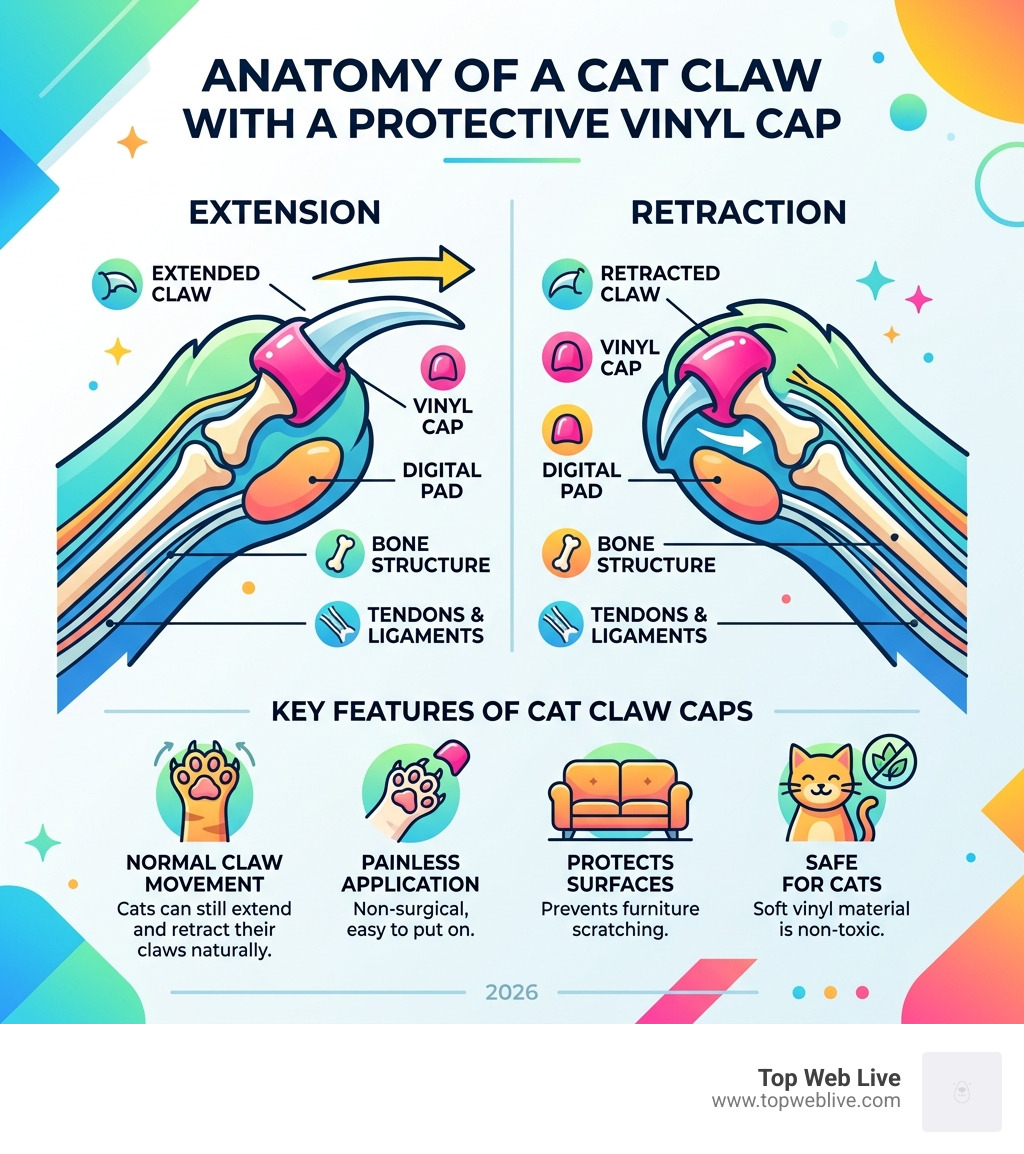
When we talk about caps for cats claws, we are referring to lightweight, hollow shields made of soft vinyl. These are designed to be a humane, non-surgical alternative to declawing. The primary goal is to cover the sharp point of the claw, preventing it from snagging on fabrics or piercing skin, while still allowing the cat to engage in natural behaviors.

These caps work by adhering to the natural nail using a pet-safe, non-toxic adhesive. One of the most common concerns we hear at Top Web Live is whether these covers interfere with a cat’s ability to walk or stretch. Because they are veterinarian-developed and often feature a patented design, high-quality caps like Kitty Claw Caps | Vetventures are shaped to mimic the natural curve of the claw.
Importantly, they do not prevent claw retraction. Cats have a unique anatomical “sheath” that their claws pull back into. If the cap is sized correctly and not pushed too far into the cuticle, the cat can still extend and retract their claws exactly as they did before. They will still “scratch” their scratching posts, but instead of the sharp tip shredding the sisal (or your rug), the smooth vinyl surface simply glides over it.
As the cat’s nail grows, the outer layer of the nail (the sheath) naturally sheds. When this happens, the nail cap falls off along with the old sheath. This is a completely natural process and is why the caps are not a permanent fixture.
How to Properly Size Caps for Cats Claws
Getting the size right is the most important step for both safety and comfort. If a cap is too big, it will fall off quickly; if it is too small, it may pinch the nail or prevent the claw from retracting fully. Most manufacturers use weight as the primary guide for sizing, but we always recommend considering your cat’s breed and build as well.
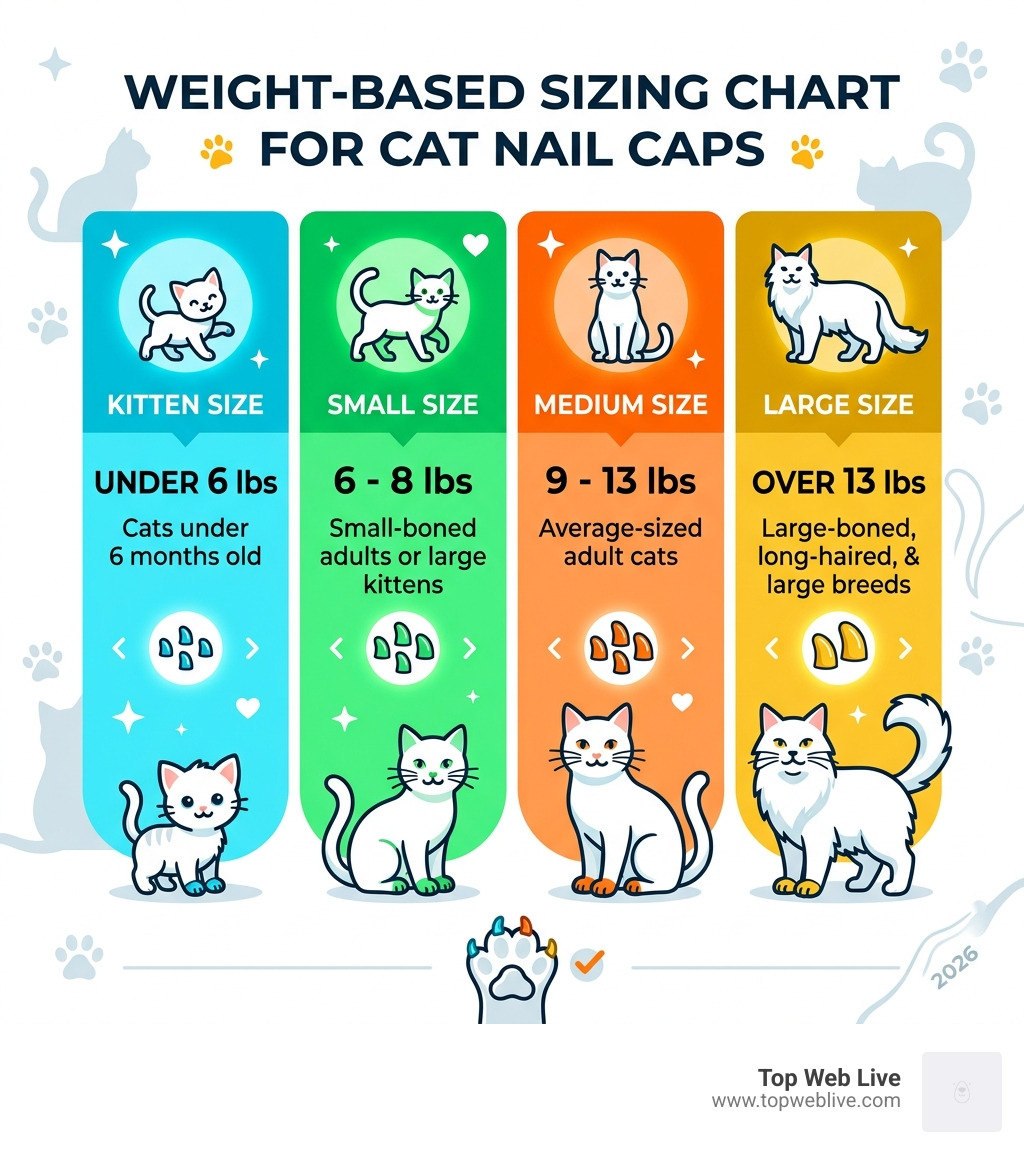
| Size | Weight Range | Typical Cat Age/Type |
|---|---|---|
| Kitten | Under 6 lbs | Cats under 6 months old |
| Small | 6 – 8 lbs | Small-boned adults or large kittens |
| Medium | 9 – 13 lbs | Average-sized adult cats |
| Large | 14 lbs and up | Large breeds like Maine Coons |
Top Web Live Pro-Tip: When you first receive your kit, do a “dry fit.” Slide a cap onto your cat’s nail without any glue. The cap should fit snugly around the base of the nail without touching the skin or the fur around the cuticle. If it looks too long, you can usually trim the open end of the cap slightly with scissors for a custom fit.
Step-by-Step Application of Caps for Cats Claws
Applying caps for cats claws for the first time can feel a bit like trying to bathe a tiger, but we promise it gets easier with practice! Here is our tried-and-true process:
- Trim the Nails: Use a pair of cat-specific clippers to trim just the very tip of the nail. You want to remove the sharp point but keep enough nail length for the cap to have something to grip.
- Test the Fit: As mentioned, try a cap on without glue first.
- Prepare the Adhesive: Using the applicator tips provided in kits like Purrdy Paws Soft Nail Caps for Cat Claws – Clear, fill the nail cap about 1/3 full with the adhesive. Do not overfill! If glue oozes out, it can stick to your cat’s fur, which is uncomfortable.
- Apply the Cap: Gently press the base of the paw to extend the claw. Slide the cap onto the nail.
- The 5-Minute Wait: This is the hardest part. You need to keep your cat still for about five minutes to let the glue set. We recommend using high-value treats or a favorite “churu” style snack to distract them during this time.
- Monitor: Check the nails over the next 24 hours. If your cat is a “nibbler,” they might try to chew one off. If they do, simply replace that specific cap. Most cats forget they are wearing them within a day or two.
Benefits of Using Nail Caps for Cats
The most obvious benefit of caps for cats claws is the preservation of your home. Whether it’s a vintage leather sofa or expensive drapes, nail caps provide a physical barrier that prevents damage. But the benefits go far beyond furniture.
Many pet owners use products like Soft Claws – Nail Caps for Cats and Dogs to protect themselves. This is particularly vital for:
- Families with young children: Kittens often don’t know how to “retract” during play, leading to accidental scratches.
- Elderly or immunocompromised owners: For those with thin skin or health conditions, a simple cat scratch can lead to serious infections.
- Multi-cat households: Caps can prevent “play-fighting” from turning into a trip to the vet for a scratched eye or abscess.
Furthermore, nail caps are an excellent tool for cats with skin conditions. If a cat has an “itch-scratch cycle” due to allergies or hot spots, they can unintentionally mutilate their own skin. Blunting the claws with vinyl caps allows the skin to heal while the underlying issue is treated.
For our senior feline friends, some owners have found that nail caps actually provide a bit of extra grip on slippery hardwood or tile floors, helping them feel more confident as they move around.
Safety and Comfort Evaluation
Is it comfortable for the cat? In our experience, the vast majority of cats tolerate nail caps exceptionally well. Because the vinyl is flexible and lightweight, cats can still perform their “daily yoga”—stretching their paws and kneading (making biscuits) without any restriction.
Safety is a top priority. High-quality caps, such as the Soft Claws Nail Caps for Cats 40 Count Pack – Red (Small) | On Sale | EntirelyPets Rx, use non-toxic adhesive. If your cat manages to chew one off and swallows it, don’t panic. The materials are designed to pass through the digestive tract without causing harm.
However, there is one non-negotiable safety rule: Nail caps are for indoor cats only. Cats that go outside rely on their sharp claws for two things: defense and climbing. If an outdoor cat encounters a predator or a mean dog, they need their “knives” to fight back or climb a tree to safety. Blunting those claws puts them at a severe disadvantage in the wild.
Professional groomers often recommend nail caps for cats that are difficult to trim. If you are nervous about the application, many grooming salons offer this as a quick and affordable service.
Common Myths and Truths About Cat Nail Covers
Because caps for cats claws are a unique product, several myths have popped up over the years. Let’s set the record straight:
Myth #1: They stop the nail from growing. Truth: The nail continues to grow normally underneath the cap. The cap is attached to the outer sheath, which eventually sheds as the nail grows out.
Myth #2: They are a permanent fix. Truth: No. Because cats shed their nail sheaths every 4 to 8 weeks, you will need to replace the caps regularly. Think of it like a manicure that needs a “fill” every month.
Myth #3: Cats can’t retract their claws with them on. Truth: If you use the correct size and don’t flood the cap with glue, the claw retracts perfectly. Only an oversized cap or excess glue sticking to the fur would prevent retraction.
Myth #4: You don’t need scratching posts if you use caps. Truth: Cats don’t just scratch to sharpen their claws; they do it to stretch their muscles and mark their territory with scent glands in their paws. You should still provide plenty of scratching outlets. The caps just ensure that when they use those outlets (or your sofa), no damage occurs.
Myth #5: All cats hate them. Truth: Most cats don’t even realize they are wearing them after the first 20 minutes. If you use positive reinforcement—like the colorful options found in the Purrdy Paws Soft Nail Caps for Cat Claws – Rainbow Combo—and plenty of treats, the process becomes a stress-free part of your grooming routine.
Frequently Asked Questions about Cat Nail Caps
Can kittens wear nail caps?
Yes! In fact, starting them young is a great way to get them used to the sensation. Most brands offer a “Kitten” size specifically for cats under 6 months old. As long as the kitten weighs at least 5-6 pounds, they can usually begin wearing them. It’s a fantastic way to train them that scratching humans or furniture isn’t an option from day one.
What if my cat swallows a nail cap?
As mentioned earlier, most reputable nail caps are made from non-toxic vinyl and use medical-grade, non-toxic adhesive. If a cap is swallowed, it will typically pass through the digestive system harmlessly. However, if you notice your cat acting lethargic or losing their appetite, always consult your veterinarian.
Do nail caps stop a cat from scratching?
No, and they aren’t meant to. Scratching is a vital, healthy, and instinctive behavior for cats. Caps for cats claws simply “disarm” the scratch. Your cat will still go through the motions of scratching, which is great for their physical and mental health, but your belongings will remain intact. For the best results, we recommend using nail caps in conjunction with sturdy scratching posts and mats.
Conclusion
At Top Web Live, we believe that pet ownership should be a joy, not a constant battle over ruined furniture. Caps for cats claws are an affordable, safe, and humane way to manage one of the more destructive aspects of feline behavior. By choosing the right size, following a careful application process, and keeping your cat indoors, you can enjoy the cuddles without the scratches.
Whether you’re looking to protect a new nursery or just want to stop your Maine Coon from redecorating your hallway, nail caps offer a colorful and effective solution. Remember to stay consistent with replacements every 4 to 8 weeks to keep those paws protected!
For more tips on keeping your feline friends happy and healthy without breaking the bank, check out More info about pet care services. Happy grooming!
