
The No-Nonsense Guide to a Bland Diet for Cats
What a Bland Diet for Cats Actually Does (And When You Need One)
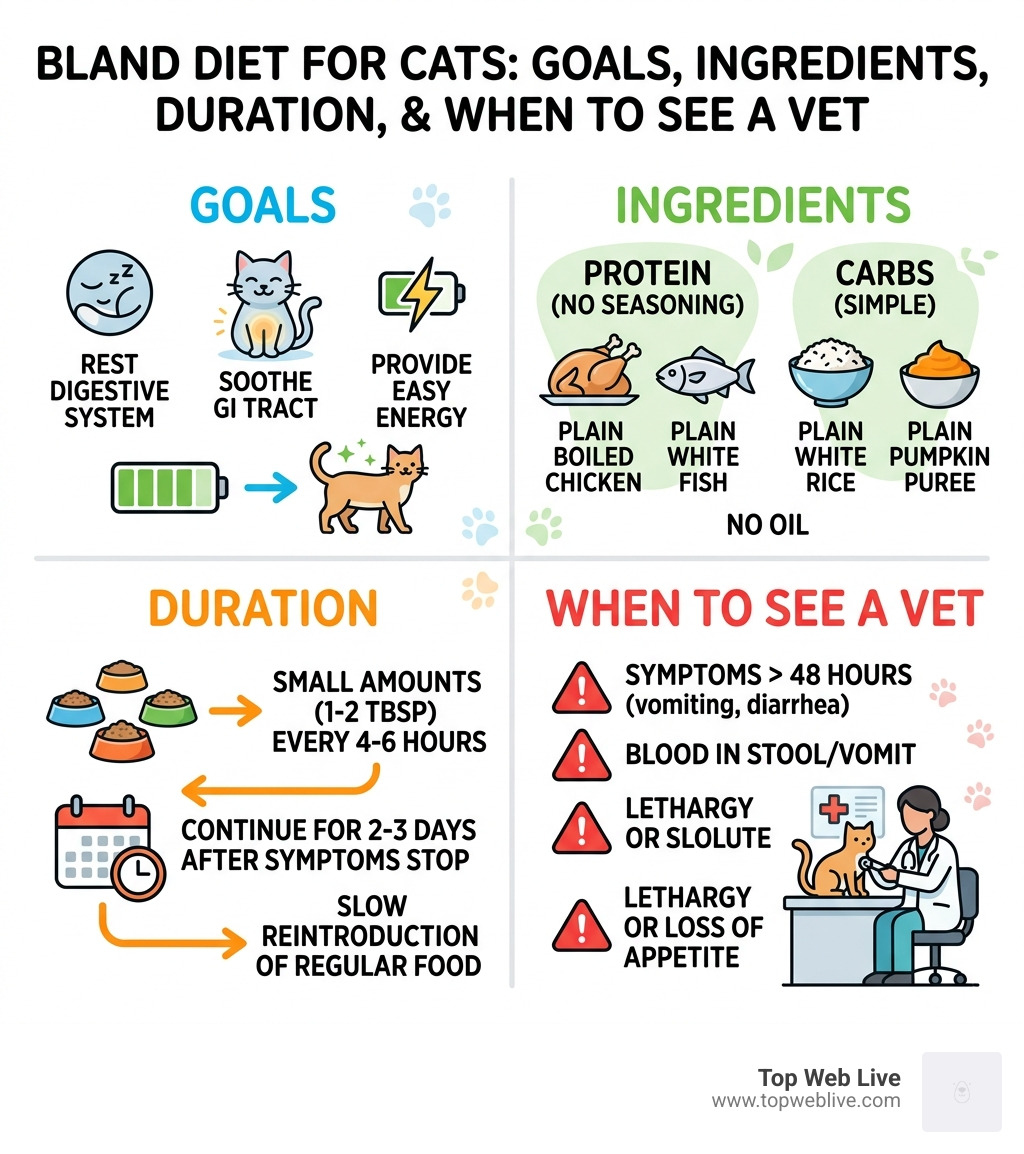
A bland diet for cats is a short-term feeding plan that uses simple, easy-to-digest ingredients to help an upset digestive system recover. If your cat is vomiting, has diarrhea, or just had surgery, here is what you need to know fast:
Quick answer:
- Feed small amounts (1-2 tablespoons) every 4-6 hours
- Use plain boiled chicken or white fish — no seasoning, no oil
- Add a small amount of white rice or plain pumpkin puree
- Continue for 2-3 days after symptoms stop, then slowly reintroduce regular food
- See a vet if symptoms last longer than 48 hours or include blood
One minute your cat is sniffing the bowl and walking away. The next, you are cleaning up a mess and wondering whether to skip meals, change food, or call the vet.
It is a stressful situation — and it is very common.
The good news is that mild digestive upset in cats often responds well to a short, simple dietary change. The key word is short. A bland diet is a temporary tool, not a long-term fix. And doing it correctly matters more than most pet owners realize.
This guide will walk you through exactly what to feed, how much, how often, and — just as importantly — when a bland diet is not enough.
Understanding the Bland Diet for Cats
When we talk about a bland diet for cats, we aren’t just talking about “boring” food. In veterinary medicine, “bland” has a very specific meaning: highly digestible, low in fat, and low in fiber. The goal is to give the gastrointestinal (GI) tract a much-needed break while still providing the energy your cat needs to heal.
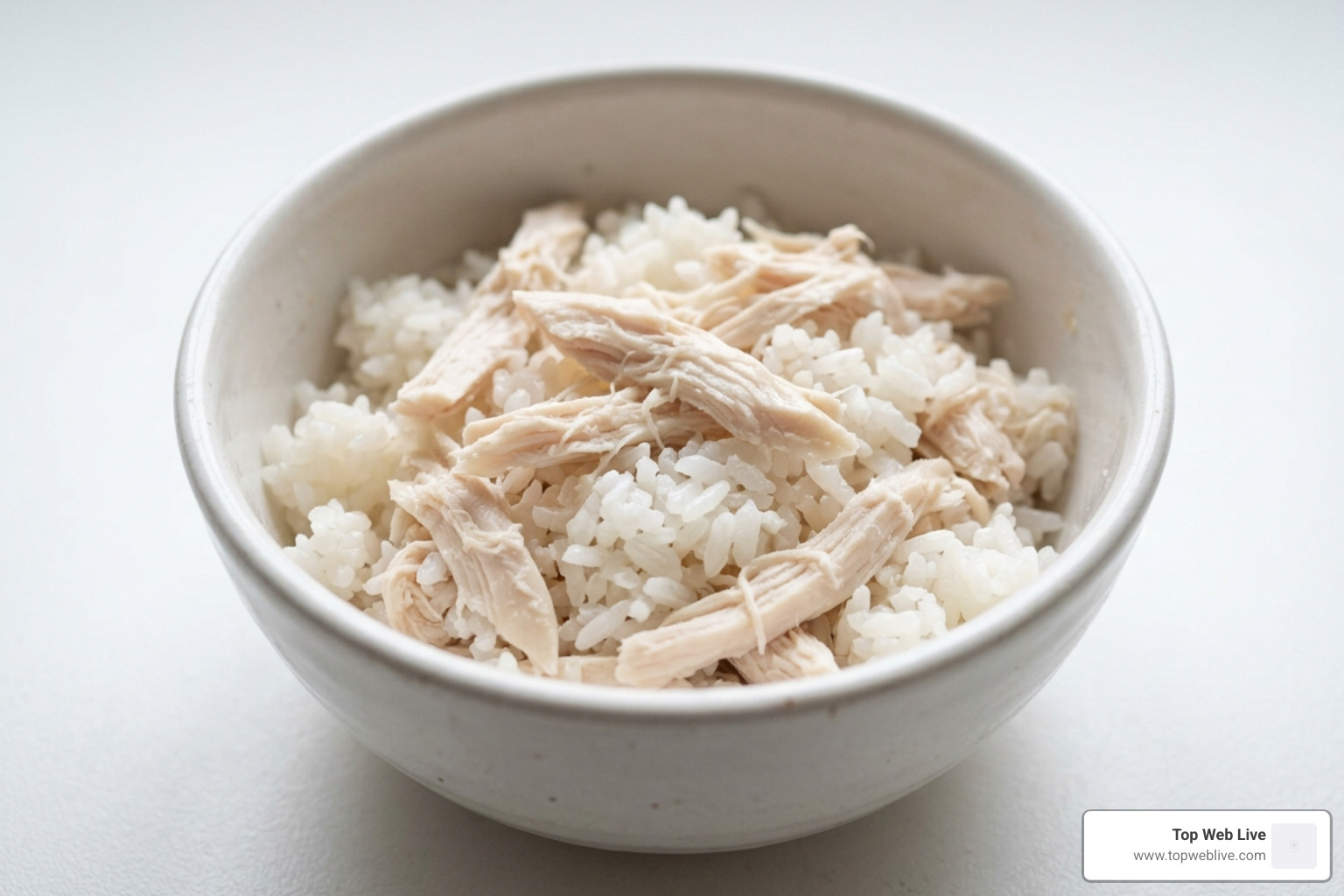
A traditional homemade bland diet typically consists of a single lean protein source (like chicken breast) and a single, simple carbohydrate (like white rice). Because these ingredients are broken down easily, the stomach doesn’t have to work overtime, and the bowels produce less waste. This helps slow down the “transit time” of food through the body, which is exactly what you want when your cat is dealing with the “runs.”
For more formal instructions on how these diets function, the Blah, Blah, and More Blah! Bland Diet Instructions for Dogs and Cats | VCA Animal Hospitals guide provides excellent clinical context.
Why Vets Recommend a Bland Diet for Cats
Veterinarians view the bland diet for cats as a therapeutic tool. Think of it like “bed rest” for the stomach. By feeding highly digestible proteins, we ensure maximum nutrient absorption with minimum effort.
However, we must remember that cats are obligate carnivores. Unlike dogs, who can handle a fair amount of carbohydrates, cats primarily need amino acids from animal tissues. While a little white rice or pumpkin can help “bind” the stool, the protein is the star of the show. A bland diet also needs to be palatable; if a sick cat won’t eat, they risk serious complications like hepatic lipidosis (fatty liver disease).
At Top Web Live, we know that keeping your pet healthy shouldn’t break the bank. You can find more info about pet health services to help manage these costs while providing top-tier care.
Symptoms That Require Dietary Intervention
How do you know it’s time to switch to the “beige and blah” menu? Look for these common signs of GI upset:
- Vomiting: Occasional “heaving” or bringing up undigested food.
- Diarrhea: Loose, watery, or frequent stools.
- Lethargy: Your cat is less active than usual or hiding.
- Loss of Appetite: Sniffing food and walking away.
- Gas and Bloating: Audible stomach gurgling or a firm belly.
- Post-operative Recovery: Cats coming out of anesthesia often need something gentle for their first few meals.
Preparing a Homemade Bland Diet for Cats

Making a bland diet for cats at home is relatively simple, but you must be strict about the ingredients. This is not the time for culinary creativity! No salt, no butter, no garlic, and absolutely no “everything bagel” seasoning.
Step-by-Step Preparation Guide
- Choose Your Protein: Use boneless, skinless chicken breast or turkey breast. White fish like tilapia or cod is also a great choice for cats who prefer seafood.
- Boil Plainly: Place the meat in a pot of water. Do not add oil or salt. Boil until cooked through.
- Skim the Fat: As the meat cooks, you’ll see bubbles of fat rise to the top. Skim these off and discard them. We want the meat as lean as possible.
- Prepare the Starch: Cook white rice until it is very soft (slightly overcooked is actually better for digestion).
- The 2:1 Ratio: For cats, we generally recommend a ratio of 2 parts protein to 1 part starch. Some vets even suggest 100% protein for cats, as they don’t strictly require the carbs, but a little rice can help with diarrhea.
- Dice and Cool: Cut the meat into tiny, bite-sized pieces. Mix with the rice and let it cool to room temperature.
- Add Moisture: If your cat isn’t drinking much, add a tablespoon of the plain chicken water (the broth you just made) back into the bowl.
Foods to Strictly Avoid
It is just as important to know what not to put in the bowl. Some common “human foods” are toxic or will make the diarrhea worse:
- Dairy: Most cats are actually lactose intolerant. Cheese or milk will likely worsen an upset stomach.
- Fatty Meats: High fat triggers the pancreas and can lead to more vomiting. Avoid chicken thighs or dark meat.
- Garlic and Onions: These are toxic to cats and can cause life-threatening anemia.
- Bones: Never give cooked bones; they can splinter and cause a GI blockage.
- Canned Tuna in Oil: If you use tuna, it must be in water and low-sodium. Oil is too heavy for a sick cat.
| Ingredient | Calories per 100g | Best For |
|---|---|---|
| Boiled Chicken Breast | 165 kcal | Primary protein source |
| Boiled White Fish | ~90-100 kcal | Picky eaters |
| Cooked White Rice | 130 kcal | Binding stool (diarrhea) |
| Plain Canned Pumpkin | 26 kcal | Added fiber |
| Scrambled Egg (No Oil) | 155 kcal | Easy-to-digest protein |
Transitioning Back to Regular Food
You shouldn’t keep your cat on a homemade bland diet for cats forever. Once the vomiting has stopped and the stool has returned to normal for at least 24 to 48 hours, it is time to transition back to their regular kibble or canned food.
Do not switch back all at once! A sudden change can trigger a relapse. We recommend a 3 to 5-day transition schedule:
- Day 1: 75% bland diet, 25% regular food.
- Day 2: 50% bland diet, 50% regular food.
- Day 3: 25% bland diet, 75% regular food.
- Day 4: 100% regular food.
During this time, monitor for “quiet” signs of discomfort. This includes lip-licking (a sign of nausea), pacing, or hiding. Also, keep a close eye on hydration. A cat with an upset stomach can dehydrate quickly.
Risks of Long-Term Bland Feeding
While a chicken-and-rice combo looks healthy, it is actually nutritionally incomplete. Research shows that a simple homemade bland diet is deficient in more than 10 essential nutrients for cats. One of the biggest risks is taurine depletion. Taurine is an amino acid found in meat that is essential for a cat’s heart and eye health. When we boil chicken, some of that taurine leaches into the water. If fed for more than 7 days, your cat may begin to suffer from these deficiencies.
Furthermore, if a cat stops eating entirely for more than 24 hours, they are at risk for hepatic lipidosis, a dangerous condition where the body tries to process fat stores too quickly, overwhelming the liver. For more on the science of feline nutrition, check out the VCA Animal Hospitals guide.
When to Consult a Veterinarian
A bland diet for cats is for mild issues. In 2026, emergency protocols are clearer than ever: you should stop home treatment and call a professional if:
- Vomiting or diarrhea persists for more than 48 hours despite the diet.
- You see blood in the stool (it may look like dark coffee grounds or bright red streaks).
- Your cat is profoundly lethargic or unresponsive.
- Your cat refuses to eat anything for 24 hours.
- You suspect your cat swallowed a foreign object (like a string or hair tie).
Frequently Asked Questions about a Bland Diet for Cats
How long should my cat stay on this diet?
In most cases, 2 to 3 days is sufficient. You want to see “resolution” of the symptoms—meaning no vomiting and solid stools—for at least a full day before you start mixing in regular food. We do not recommend exceeding 7 days on a homemade bland diet without direct veterinary supervision because of the risk of nutrient gaps.
How much should I feed my cat per meal?
Instead of two large meals, think “small and frequent.” Offer 1 to 2 tablespoons every 4 to 6 hours. This prevents the stomach from becoming over-distended and reduces the urge to vomit. An average 10 lb cat needs about 200 kilocalories per day. If you are using boiled chicken breast (approx. 30 calories per ounce), that’s about 6-7 ounces of food spread across the day.
Can I use pumpkin for feline diarrhea?
Yes! But it must be plain, canned pumpkin puree—not pumpkin pie filling (which contains sugar and spices like nutmeg that are toxic). Pumpkin is rich in soluble fiber, which acts like a sponge to soak up excess water in the gut, and it’s a great source of potassium, which cats lose during bouts of diarrhea. Start with just a teaspoon mixed into their protein.
Conclusion
Managing your cat’s digestive health doesn’t have to be a mystery. By using a bland diet for cats as a temporary bridge to recovery, you can help your feline friend feel better faster without unnecessary stress.
At Top Web Live, our mission is to provide affordable pet care and accessible health advice that fits into your daily life. Whether it’s a simple stomach ache or long-term wellness planning, we are here to help you navigate feline health in 2026 and beyond. Visit Top Web Live for more pet care tips and stay informed on the best ways to keep your pets happy and healthy!
